
OUR MISSION
THE PROBLEM
The design and simulation process for aerospace systems remains inefficient. Despite accounting for up to 40% of total development costs and time, engineering teams still face significant challenges, including:


OUR SOLUTION
FAERO solves these challenges by integrating design and simulation workflows into a unified optimization platform. Powered by advanced AI algorithms, this platform further enables engineering teams to:



OUR TECHNOLOGY
Ogawa Nexus
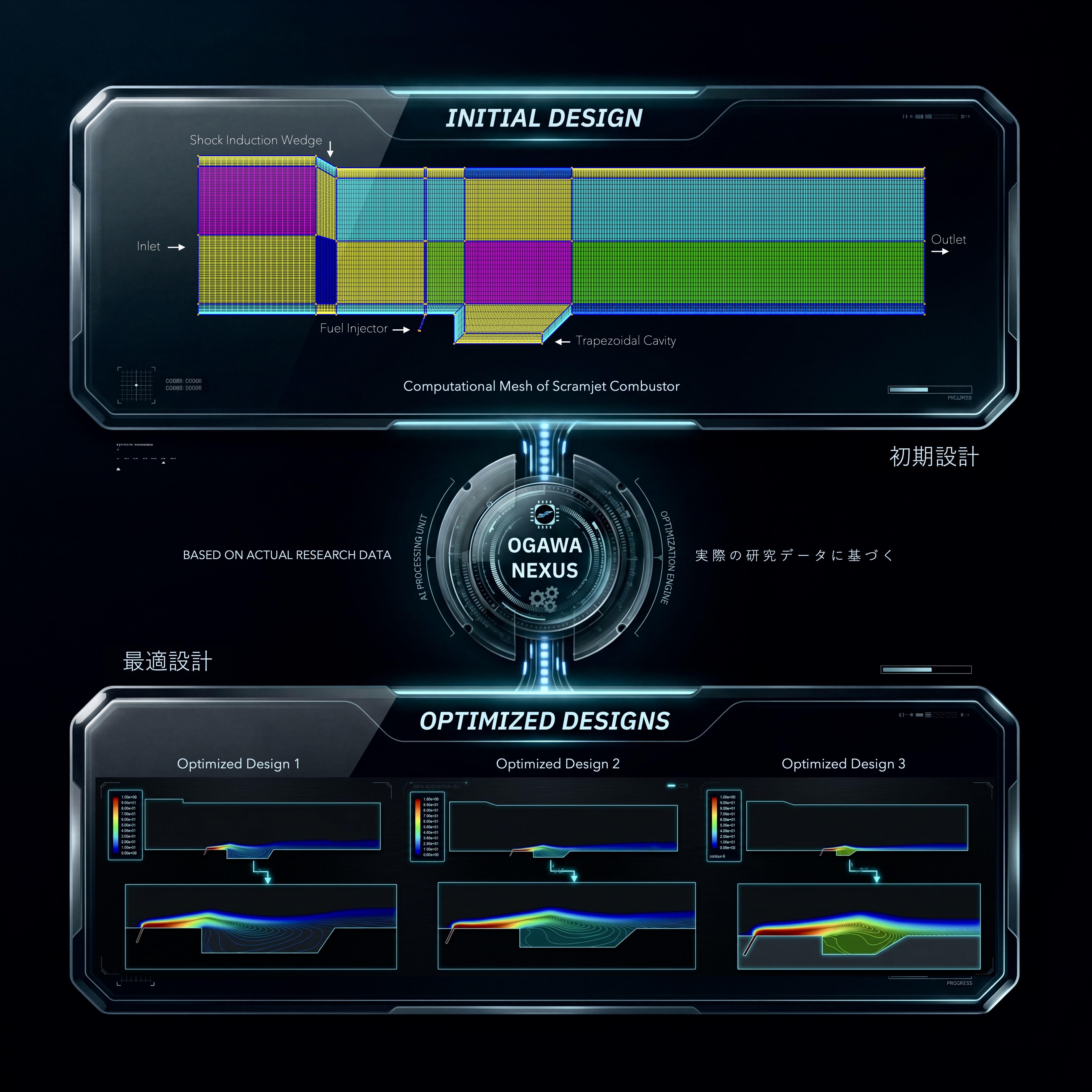
FAERO's core technology is the Ogawa Nexus (ON), a next-generation optimization platform. It enables more efficient aerospace system development, reducing total costs and timelines by up to 25%, while advancing innovation.
The ON platform delivers value across three key areas of aerospace development: design exploration, simulation, and optimization. In an automated workflow, the ON can explore over 1,000 design variations from a single baseline design. Additionally, it significantly accelerates CFD simulations through its advanced metamodeling capabilities. Finally, it automatically generates optimized designs based on user-defined objectives and constraints.
The ON platform was developed and applied through aerospace engineering research at Kyushu University, Japan, and its technical accuracy has been validated through peer-reviewed scientific publications.
OUR TECHNOLOGY
Ogawa Nexus
FAERO's core technology is the Ogawa Nexus (ON), a next-generation optimization platform. It enables more efficient aerospace system development, reducing total costs and timelines by up to 25%, while advancing innovation.
The ON platform delivers value across three key areas of aerospace development: design exploration, simulation, and optimization. In an automated workflow, the ON can explore over 1,000 design variations from a single baseline design. Additionally, it significantly accelerates CFD simulations through its advanced metamodeling capabilities. Finally, it automatically generates optimized designs based on user-defined objectives and constraints.
The ON platform was developed and applied through aerospace engineering research at Kyushu University, Japan, and its technical accuracy has been validated through peer-reviewed scientific publications.